
What is a stair elevator?
A stair elevator is a seat that travels on a rail screwed to your stairs. Sit down at the foot of the stairs, press a small lever on the armrest, and it takes you up. Shops and installers call it a stairlift.
Most cost $2,500 to $5,000 installed on straight stairs and $8,000 to $12,000 on stairs that turn. Medicare does not pay for one.
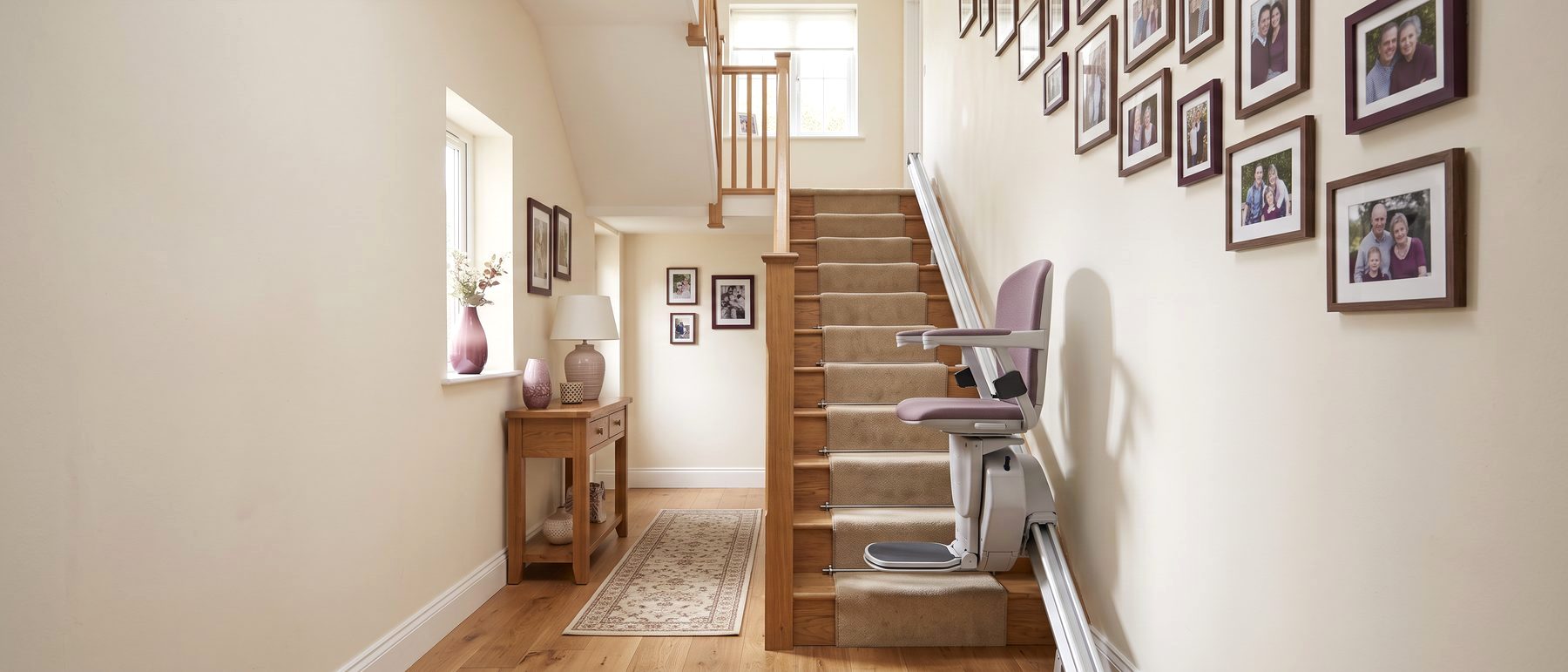
How a stair elevator works
You sit down at the foot of the stairs, fasten the belt and hold the lever on the armrest. A small motor carries the seat up the rail, and at the top the seat turns so you step off onto the landing, away from the stairs. Each end of the rail has a call button and a charging point.

Stair escalator, elevator chair lift and other names
Quotes and installers write stairlift. Adverts use looser names for the same chair: seat elevator for stairs, elevator chair lift, and sometimes stair escalator, though it has no moving steps.
What a home stair elevator costs
Your staircase's shape sets which chair elevator for stairs fits, and the rail makes up most of what you pay.
 Straight$2,500–$5,000 installedOne flight with no turns. The quickest to install and the lowest price.
 Curved$8,000–$12,000 installedA rail bent to follow stairs that turn or stop at a landing.
 Outdoor$4,000–$8,000 installedSealed against rain and sun for porch, deck or garden steps.
 Standing$2,000–$5,500 installedA small high seat you half-sit on, for stiff knees or very narrow stairs.
Short on budget? Renting runs about $175 to $500 a month, and a used straight lift sells for about $2,000 to $3,000. Using a wheelchair? A platform lift carries the chair too. A home elevator is a different machine that rides in its own shaft: compare a stair lift with an elevator.
Before you buy a home stair elevator
How long does fitting take?
Fitting a straight rail usually takes a few hours. A curved rail is first made to measure, which takes a few weeks, and the fitting visit is then longer than for a straight one.
Will it fit narrow stairs?
Most need stairs at least 26 to 28 inches wide. If yours are tight, ask about a standing seat, which is made for narrow stairs.
How much weight can it carry?
About 300 pounds on a standard chair. Heavy-duty models carry up to 600 pounds.
What if the power goes out?
It keeps working. The chair runs on batteries, and most hold enough charge for about 10 to 20 trips.
Prices, weight and batteries: National Council on Aging. Fitting time and stair width: Lifeway Mobility, Fixr and MobilityWorks.
Loans and advice from your state
Each state has a free assistive technology program. Pick yours to see its name and phone number. See every state's program.
Medicare does not pay, but Medicaid home care programs in many states, VA grants for veterans and the federal medical tax deduction sometimes can: who helps pay for a stair lift.
Discuss your stairs with someone
Our referral line takes your stair details and connects you with a nearby installer, who gives you a written price. We are not installers ourselves.